

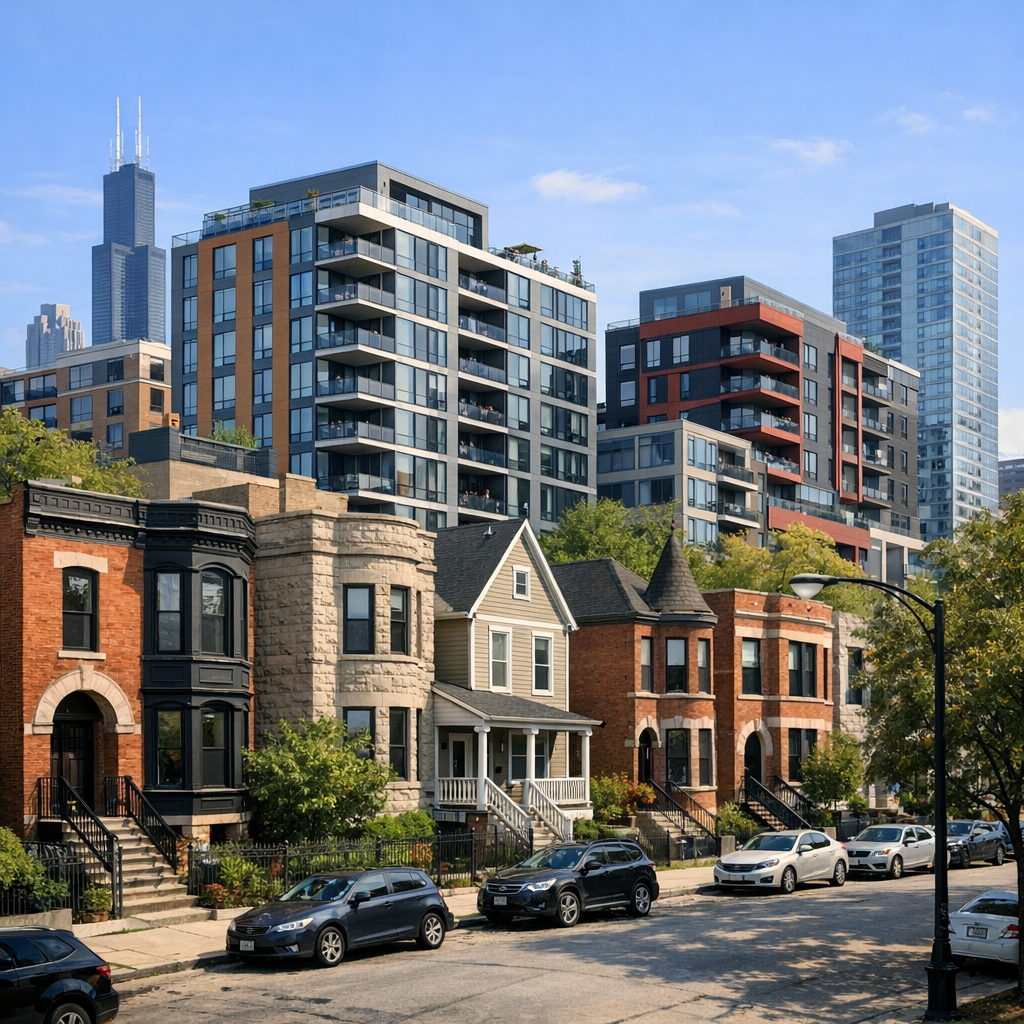
By Grace O’Malley
Where the Chicago Market Stands
Chicago’s housing market continues to evolve under tight supply and steady demand. Median sale prices have climbed, with recent data showing homes going for around $430,000 in many neighborhoods—an increase of roughly 7% year-over-year. Buyers are waiting on average 40–50 days before closing, a modest improvement from earlier times. Meanwhile, listings remain well below pre-pandemic levels. These patterns point to a market that’s competitive but not overheated. (Data through mid-2026.)
Rentals & Multifamily: Rising Trends
Rentals in the city are trending upward. The average rent has surpassed $2,300 per month in many Chicago neighborhoods, especially near downtown and lakefront areas. Multifamily buildings, particularly Class B and C properties, are seeing some of the strongest demand—these are the units that often offer slightly lower rent but more accessible locations. Vacancy rates remain low in walkable neighborhoods like Lincoln Park, Lakeview, Rogers Park, and in areas surrounding the central business district. (Latest Q2 reports.)
What Helps & What Holds Back Buyers
Mortgage rates have eased somewhat from their highs, which helps, but they’re still significant enough to impact monthly payments. Limited inventory has made finding move-in ready homes especially challenging. Added to that are rising costs for renovation, property taxes, and insurance. For buyers, patience and flexibility—on neighborhood, property condition, or timing—are increasingly important.
Development & Incentives: What’s Coming
Chicago development activity is strong where infrastructure meets demand. Multifamily projects along transit corridors and near amenity-rich neighborhoods are seeing attention from developers and investors. There are also new programs designed to help buyers. One example: the HomeGrown Purchase Assistance grants help income-qualified buyers with down payments and closing costs in targeted census tracts. In neighborhoods facing vacancy but positioned for growth—think North Lawndale—new loan options aim to support rehabs and construction of multifamily housing. (Launched in 2026.)
Tips for Buyers, Renters & Investors
For Buyers
- Get pre-approved early: being ready to act gives you an edge when inventory is tight.
- Explore incentives: check for programs like HomeGrown or local tax credits.
- Be realistic about location vs condition—sometimes choosing a less central area with good transit can balance cost.
For Renters
- Watch for neighborhoods where new construction is limited—those rents tend to climb fastest.
- Negotiate where possible, especially in Class B/C buildings.
- Stay alert: sometimes older units become available unexpectedly in surge areas.
For Investors / Developers
- Focus on areas with transit access and growing amenities—demand and rents perform better there.
- Smaller scale rehabs or multifamily developments may offer steadier returns right now than large new builds.
- Leverage local grants and programs to reduce upfront costs in targeted tracts.
In sum, Chicago’s housing scene remains tight but not without opportunity. Whether you’re buying, renting, investing or developing, knowing where the demand is moving—and what financial tools are available—makes all the difference.