

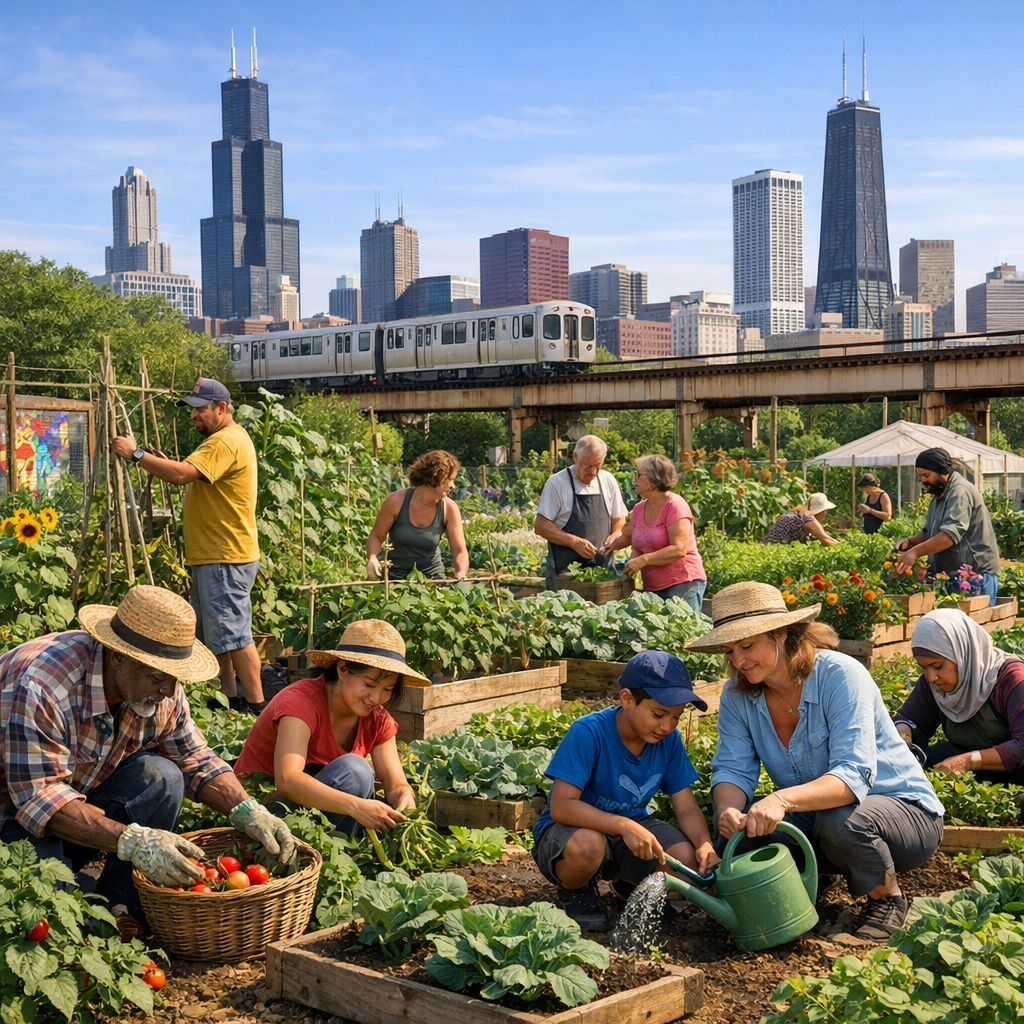
In the heart of Chicago, amidst the urban landscape, community gardens have emerged as vital spaces where residents come together to cultivate not just plants, but also relationships and a sense of belonging. These green oases offer more than just fresh produce; they serve as hubs for education, sustainability, and community engagement.
The Impact of Community Gardens
Community gardens address various urban challenges by providing access to fresh, locally grown produce, promoting environmental stewardship, and creating safe, communal spaces. They offer residents the opportunity to engage in physical activity, learn about sustainable agriculture, and build connections with neighbors.
Notable Community Gardens in Chicago
Edna White Community Garden
Located at 1812 W Monterey Ave, the Edna White Community Garden has been a cornerstone of the Morgan Park neighborhood. Established on an abandoned lot, it now thrives with cooperative gardening workdays held on Sundays and Wednesdays. The garden partners with local groups to support food pantries and community initiatives.
Taylor Street Farms
Situated behind the Little Italy Branch of the Chicago Public Library, Taylor Street Farms boasts over 70 garden beds, a picnic area, and an apiary. Recognized for its sustainability efforts, it was the first community garden in Chicago to earn Conservation@Home status. The farm also donates produce to local food shelters.
Ginkgo Organic Gardens
In the Uptown neighborhood, Ginkgo Organic Gardens focuses on growing heirloom fruits and vegetables using sustainable practices. Entirely volunteer-run, the garden donates its produce to organizations serving individuals facing poverty and illness, fostering a spirit of giving and community support.
Getting Involved
For those interested in joining or supporting a community garden, the Chicago Park District offers resources and information on existing gardens and how to start new ones. NeighborSpace, the city’s nonprofit urban land trust, also provides support to community groups in establishing and maintaining gardens.
Community gardens are more than plots of land; they are vibrant spaces where Chicagoans can connect, learn, and grow together. Whether you’re an experienced gardener or a curious newcomer, these gardens offer a place to cultivate both plants and community spirit.