

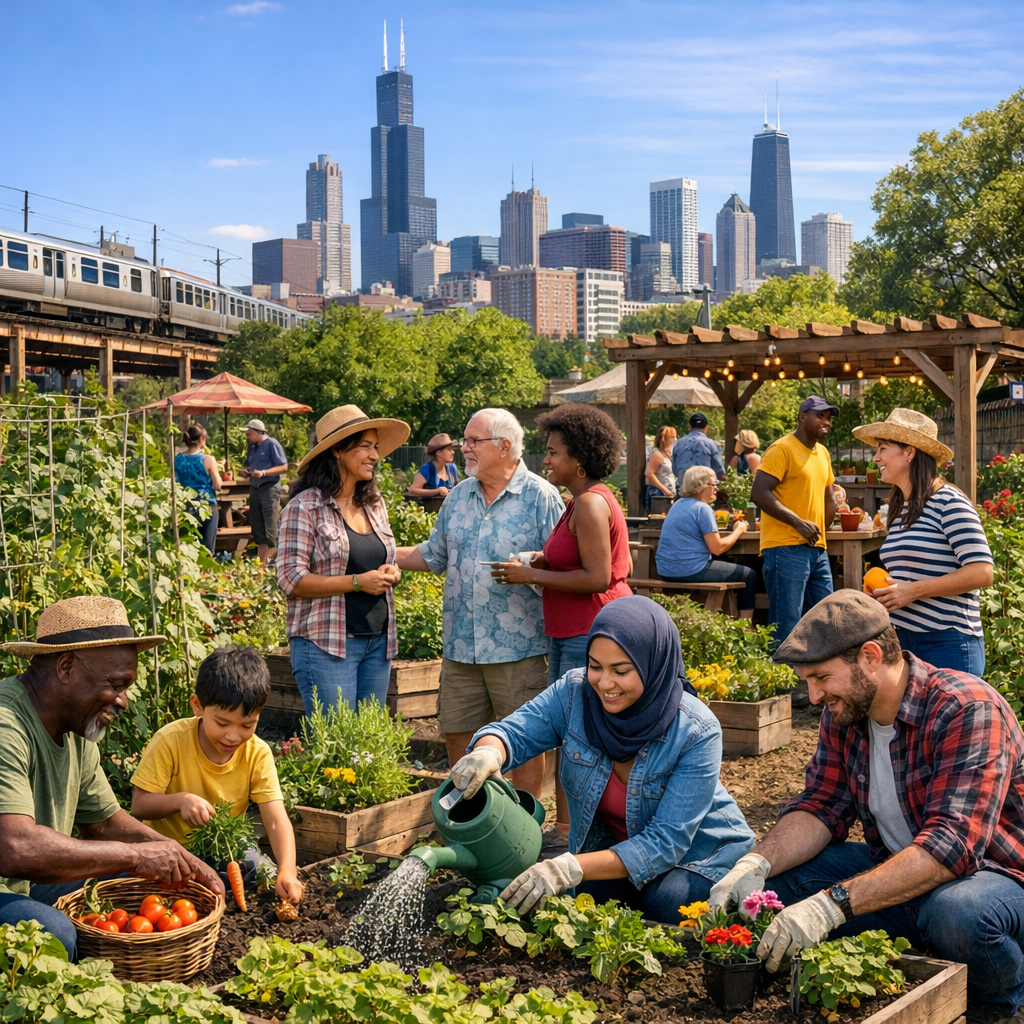
In the heart of Chicago, amidst the bustling cityscape, community gardens have emerged as vital spaces that foster connections, promote sustainability, and enhance urban life. These green sanctuaries offer residents a place to cultivate not only plants but also relationships and a sense of belonging.
The Growth of Community Gardens in Chicago
Chicago boasts over 90 community gardens spread throughout its parks, each varying in size, style, and function. From ornamental landscapes featuring native plants to edible gardens with allotment plots and children’s learning areas, these spaces cater to a diverse range of interests and experience levels. The Chicago Park District supports these initiatives, providing opportunities for residents to volunteer and engage with their local green spaces.
Notable Community Gardens
Several community gardens stand out for their contributions to their neighborhoods:
Edna White Community Garden
Located at 1812 W Monterey Ave, the Edna White Community Garden offers cooperative gardening workdays on Sunday mornings and Wednesday evenings. The garden partners with local groups to grow vegetables for initiatives like the Burrito Brigade-Chicago and local food pantries. Memberships are available for those interested in growing their own fresh produce in a supportive community environment.
Taylor Street Farms
Situated behind the Little Italy Branch of the Chicago Public Library, Taylor Street Farms features over 70 garden beds, a picnic area, an apiary, and the Taylor Street Prairie. The farm is the first community garden in Chicago and Cook County to earn Conservation@Home status by the Forest Preserves of Cook County. Garden plots are available for rent, with a commitment to organic gardening practices.
62nd Street Community Garden
Located between Kenwood and Dorchester, the 62nd Street Community Garden has been a Woodlawn asset since 2010. As part of NeighborSpace, Chicago’s only nonprofit urban land trust, the garden focuses on organic vegetable production and donates excess produce to local food pantries. Sidewalk garden boxes offer produce for neighbors to harvest, promoting community engagement and access to fresh food.
The Impact on Urban Life
Community gardens in Chicago serve as more than just spaces for cultivation; they are hubs for education, sustainability, and community building. They provide residents with access to fresh produce, opportunities for physical activity, and a platform for environmental education. Moreover, these gardens contribute to the beautification of neighborhoods, creating peaceful retreats from urban life.
Organizations like NeighborSpace play a crucial role in preserving and sustaining these gardens, offering support in property ownership, insurance, water access, and more. This allows community groups to focus on their gardening and community-building visions, generating food, beauty, play, health, and safety for their neighborhoods.
Getting Involved
For those interested in joining or starting a community garden, the Chicago Park District provides resources and guidance. Whether you’re a seasoned gardener or a novice looking to learn, there’s a place for everyone in Chicago’s community gardens. Engaging with these spaces not only enriches individual lives but also strengthens the fabric of our communities.
In a city as vibrant and diverse as Chicago, community gardens stand as testaments to the power of collective effort and the enduring human connection to nature. They remind us that even in an urban environment, we can cultivate growth, both in our gardens and in our communities.