

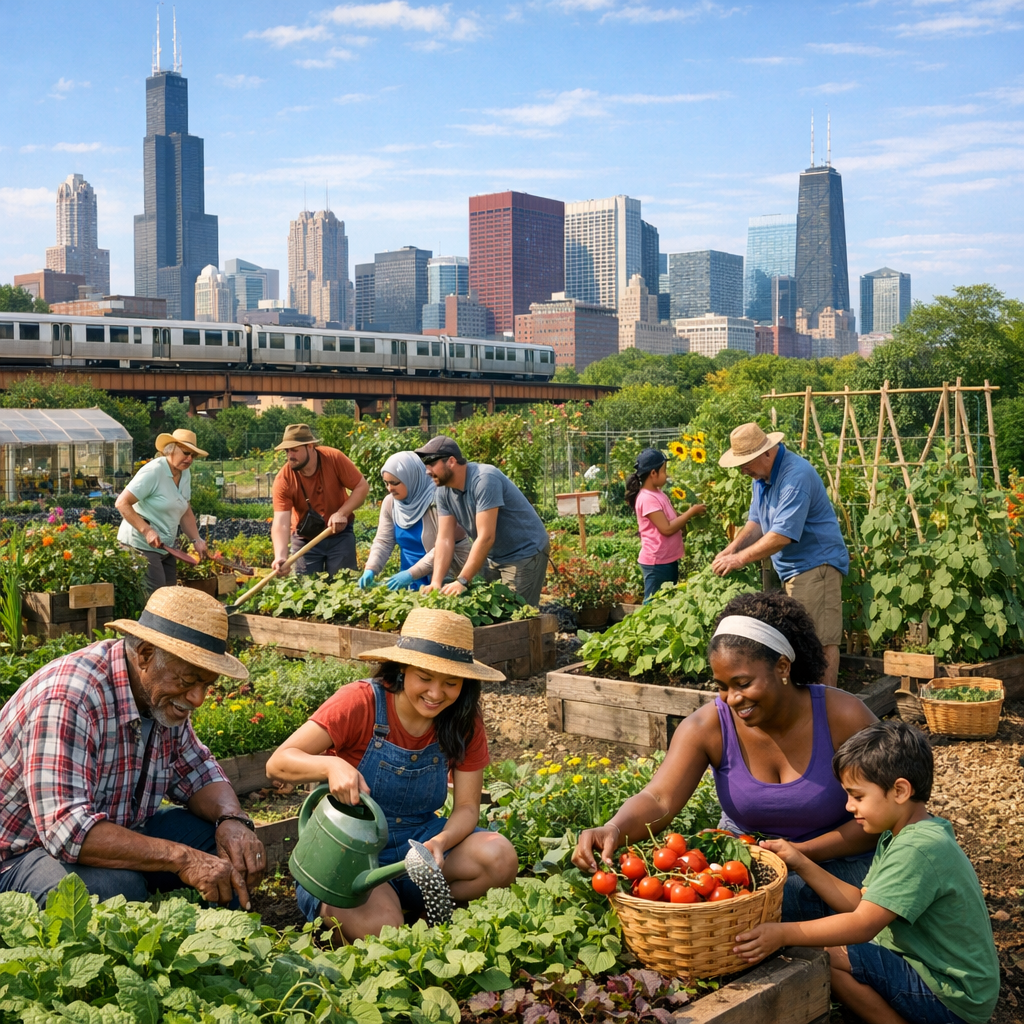
In the heart of Chicago, amidst the bustling streets and towering skyscrapers, community gardens serve as verdant sanctuaries where residents come together to cultivate not just plants, but also relationships and a shared sense of purpose. These green spaces offer more than just fresh produce; they are vital hubs for community engagement, education, and environmental stewardship.
The Impact of Community Gardens
Community gardens provide numerous benefits to urban neighborhoods. They offer residents the opportunity to grow their own food, promoting healthier eating habits and food security. Additionally, these gardens serve as educational platforms where individuals can learn about sustainable gardening practices, composting, and the importance of biodiversity.
Beyond the tangible benefits, community gardens foster social connections. They bring together people from diverse backgrounds, encouraging collaboration and mutual support. This sense of community can lead to increased neighborhood cohesion and a stronger collective identity.
Spotlight on Local Initiatives
Several community gardens in Chicago exemplify the positive impact these spaces can have:
Edna White Community Garden
Located at 1812 W Monterey Ave, the Edna White Community Garden has been a cornerstone of the Morgan Park neighborhood since its dedication in 1993. Named in honor of community activist Edna White, the garden offers cooperative gardening workdays on Sunday mornings and Wednesday evenings, inviting residents to participate in cultivating a variety of plants. The garden also partners with local groups to support food pantries and initiatives like the Burrito Brigade-Chicago, which provides meals to those in need.
Park 540 Community Garden
Situated at 2440 South Dearborn Street, the Park 540 Community Garden serves the South Loop and adjacent neighborhoods. Managed by a dedicated group of community members, the garden features 28 raised beds where both ornamental and edible plants are grown. The garden emphasizes inclusivity and community building, offering beds to nonprofit organizations and maintaining a waitlist for interested gardeners.
62nd Street Community Garden
Located between Kenwood and Dorchester Avenues, the 62nd Street Community Garden has been a part of the Woodlawn neighborhood since 2010. As part of NeighborSpace, Chicago’s nonprofit urban land trust, the garden focuses on organic vegetable production. Excess produce is donated to local food pantries, and sidewalk garden boxes are available for neighbors to harvest, reinforcing the garden’s commitment to giving back to the community.
Getting Involved
For those interested in joining or supporting a community garden, there are several ways to get involved:
- Volunteer: Many gardens welcome volunteers for planting, maintenance, and educational programs.
- Apply for a Plot: Some gardens offer individual plots for residents to cultivate their own plants. Due to high demand, there may be waitlists, so it’s advisable to inquire early.
- Attend Events: Community gardens often host workshops, festivals, and other events that are open to the public.
- Support Organizations: Consider supporting organizations like NeighborSpace, which help preserve and sustain community gardens across Chicago.
Community gardens are more than just plots of land; they are vibrant spaces that nurture both plants and people. By participating in these gardens, residents can contribute to a greener, more connected Chicago.